
Se incarca...
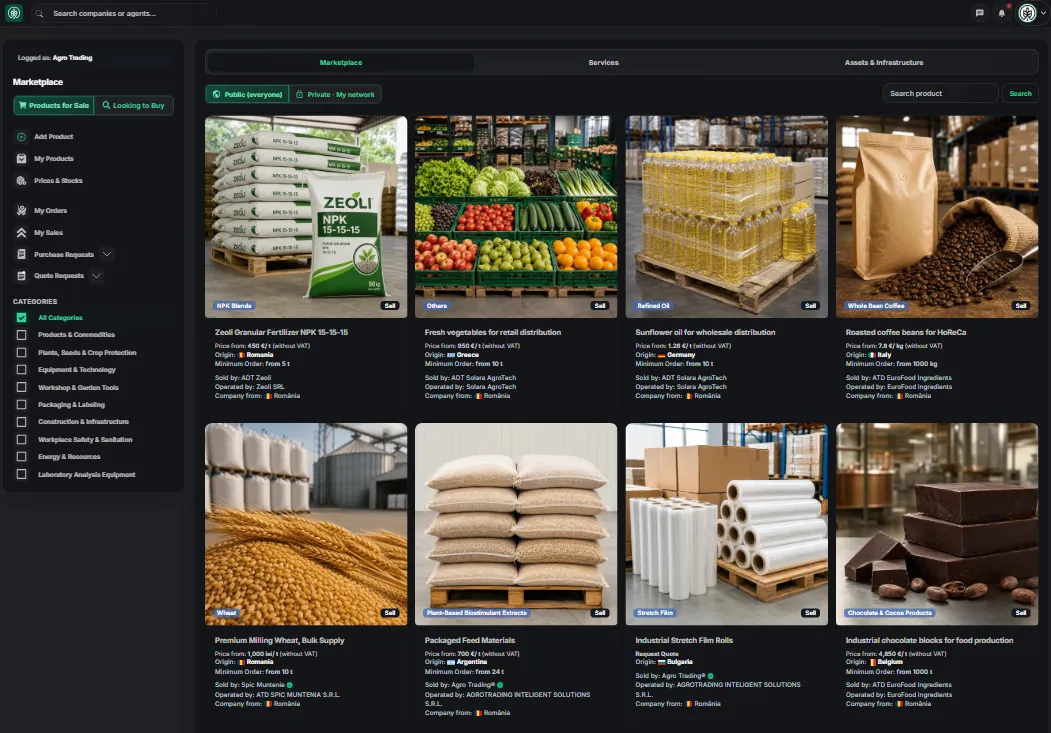
The Agro Raw Materials category brings together basic agricultural resources relevant to production, processing, distribution and trade between companies. It plays an important role in the AgroTrading product structure, as it covers a wide range of goods used both as commercial products in themselves and as raw materials for industrial and agri-food flows.
This page explains how the main subgroups within agricultural raw materials are organized, so that companies can more easily identify the areas relevant to their activity. The structure serves an editorial and semantic role. AgroTrading does not physically verify goods, does not guarantee product quality and does not intervene in contractual or logistic relationships between commercial partners.
The Agro Raw Materials category describes the main types of basic agricultural resources communicated in AgroTrading for B2B relationships between validated companies. The page organizes these goods in a clear structure, without guaranteeing quality, delivery or transaction results.
This group includes cereals essential for agri-food and feed markets, such as wheat, corn, barley, oats, rye and rice, as well as pseudocereals and specialty crops such as buckwheat, quinoa, spelt, teff and amaranth. They are relevant for processing, wholesale trade, distribution and industrial uses.
Oilseeds include sunflower, rapeseed, soy, flax, sesame, camelina, castor and other crops relevant to oils, derivatives and industrial uses. In certain commercial and technological contexts, this group may also cover resources oriented toward biofuels or specialized technical applications.
Legumes include peas, beans, chickpeas, lentils, lupins, broad beans, peanuts, guar and other similar crops, relevant for consumption, processing or technical uses. Fruits and vegetables can be communicated in fresh, raw or processing-oriented forms, depending on the activity of the companies involved.
This zone includes medicinal and aromatic plants, tobacco, hops, cotton, industrial hemp, energy willow, miscanthus, stevia, lavender, aloe vera and other specialty crops. Also included are raw materials for processing, such as starch, raw sugar, molasses, industrial syrups, crude oils, pomace and other agricultural by-products.
Includes wheat, corn, barley, oats, rye, rice and other cereals used in consumption, processing, baking, feed or industrial applications.
Covers buckwheat, quinoa, spelt, teff, amaranth and other specialty crops that complement the range of agro raw materials for B2B processing and trade.
Brings together sunflower, rapeseed, soy, flax, sesame, camelina, castor and other plants cultivated for oil, technical derivatives or industrial uses.
Includes beans, peas, chickpeas, lentils, broad beans, lupins, peanuts, edamame, guar and other crops relevant to consumption, processing or specialized supply chains.
Covers fresh or processing-oriented horticultural products, relevant to B2B trade, distribution, retail and the food industry.
Includes lavender, stevia, hops, cotton, industrial hemp, tobacco, medicinal plants and other crops with specific commercial or technological uses.
Brings together starch, raw sugar, molasses, crude oils, industrial syrups, pomace and other agricultural resources used as a basis for further production.
Covers straw, stalks, spent grain, meal, useful residues and other secondary resources utilized in economic or operational activities.
The Agro Raw Materials page is intended for agricultural producers, traders, processors, distributors, importers, exporters and other economic operators working with basic agricultural resources. It is also useful for procurement, sales and commercial development teams that need a clear understanding of the raw material groups relevant to the ecosystem.
The Agro Raw Materials category serves to organize one of the most important zones of the B2B agri-food offering and to create clear links to processing, logistics, feed, industry and related services. It contributes to the semantic relevance of the platform and to better orientation of companies regarding the types of agricultural resources communicated.
The texts on this page serve an informational purpose and describe the agro raw materials structure at a presentation level. AgroTrading does not guarantee the existence of batches, product quality, commercial parameters or the execution of obligations between companies using the platform.
Today's decisions define tomorrow's collaborations.


